
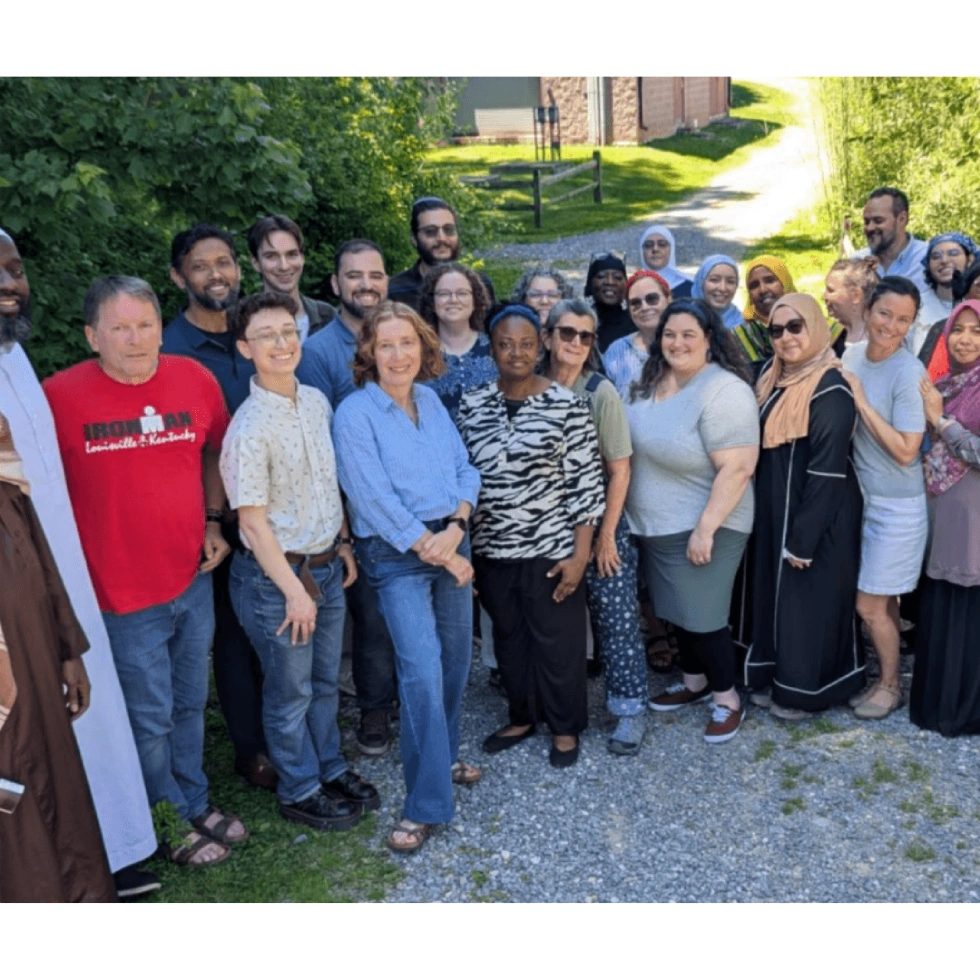
This summer, I had the privilege of representing The Islamic Seminary of America (TISA) at the Emerging Religious Leaders Intensive(ERLI) Program at the Pearlstone Center. The journey into the centre itself felt like a transition into a different rhythm of life. As we left the main roads and moved deeper into the grounds, the surroundings became increasingly secluded, immersed in trees, open fields, and stretches of natural landscape. By the time we arrived, the setting felt intentionally removed from daily noise—quiet, spacious, and designed for reflection. Over the five days we spent there, the weather remained consistently beautiful. Most days were bright and sunny, with clear skies and warm light filtering through the trees. The sound of birds was constant throughout the day, becoming part of the atmosphere in
every conversation, meal, and walk across the grounds. The environment naturally encouraged stillness and attentiveness, shaping the pace of how we listened and engaged with one another. Muslim, Jewish, and Christian faith leaders gathered for the program to learn from one another, engage in honest dialogue, and explore what it means to live faithfully in a world marked by both diversity and deep disagreement.
The program was structured around three phases:
Orientation, Disorientation, and Reorientation. During Orientation, participants introduced their faith traditions by sharing theology, practices, histories, and lived experiences. Questions ranged from straightforward to challenging, yet were consistently asked with sincerity. What stood out was not only the opportunity to learn about other traditions, but also the visible diversity within each faith community itself.
The Disorientation phase brought us into some of the most difficult conversations of the week, including discussions on Israel and Palestine. On the first day of this segment, I noticed tissue boxes placed on every table. At the time, it seemed like a small, unusual detail. By the end of the session, its meaning was clear. These conversations were not abstract or detached. They were shaped by grief, memory, identity, fear, and lived experience. At moments, voices trembled, and tears were shed. At others, silence filled the space more heavily than words. The facilitators guided the process carefully, collecting questions in advance and structuring dialogue in a way that allowed participants to hear one another fully before responding. There was no space for interruption or rebuttal, only listening, reflection, and response
rooted in care rather than reaction.
By the time we reached the Reorientation phase, the tone of the group had shifted. After days of sustained engagement with difficult truths, we were invited to reflect on both differences and shared commitments. Despite theological and cultural distinctions, recurring themes emerged across traditions: devotion to God, service to others, compassion, justice, and responsibility toward humanity. The program concluded this phase with the exchange of resources and reflections on interfaith figures whose lives modelled bridge-building across religious boundaries.
Beyond the formal sessions, some of the most meaningful moments took place in everyday settings. Conversations continued over shared meals, coffee breaks, and long walks across the grounds. The natural environment remained ever-present, birds moving through the trees, sunlight shifting across open fields, and occasional sightings of rabbits and farm animals along the paths. Each faith group had dedicated prayer spaces and time for co-religious reflection, providing grounding throughout the week. In the evenings, informal gatherings deepened relationships that had begun in structured dialogue. The final night was marked by a bonfire. As the fire burned and the sky darkened, participants gathered to share stories, laughter, songs, and marshmallows. It was a simple setting, yet it carried a profound sense of shared humanity. The following morning, we departed with gratitude and a quiet awareness of how rare such spaces of sustained, honest engagement can be. As a Muslim chaplain serving in a multifaith university environment, this experience reinforced the importance of interfaith engagement grounded in both conviction and humility. It is not agreement that sustains meaningful dialogue, but the willingness to remain present with one another in moments of tension, discomfort, and difference. One of the most significant lessons from this experience was that listening is an active and disciplined practice. It requires restraint, patience, and the ability to resist the impulse to respond immediately. When people are given space to speak fully and to be heard without interruption, the quality of understanding in the room changes, even when disagreements remain.
This program also underscored that behind every public issue are human stories shaped by lived experience. When those stories are shared in environments of care and structure, the nature of conversation shifts from debate toward deeper recognition of one another’s humanity. I return from this experience with gratitude, but also with responsibility. The insights, relationships, and practices gained at Pearlstone are not meant to remain within a single week. They must inform how I serve, teach, and facilitate dialogue in my ongoing work as a chaplain. Representing TISA in this setting was both an honour and a meaningful responsibility. The experience reaffirmed my commitment to interfaith engagement not as an abstract ideal, but as a lived practice that requires patience, presence, and courage. In a world often shaped by rapid reaction and division, this program offered a different reminder: that understanding grows slowly, through sustained attention, honest conversation, and shared space.